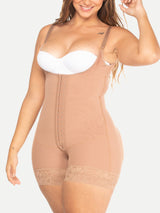
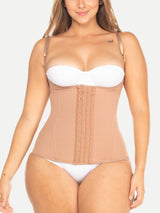
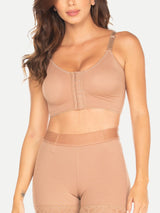


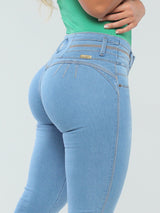




Colombian fajas and generic shapewear are the same category of garment made in very different ways. Generic shapewear uses thin nylon blends that compress evenly but lose their structure within months. Authentic Colombian fajas use Powernet fabric, hand-finishing, and structured panels designed by manufacturers in Medellín with decades of experience. The difference shows up in fit, durability, and how the garment performs after eight hours of wear.
In This Article · 5 min read
Faja is the Spanish word for shapewear. That is all it means. So when you see "Colombian faja" and "shapewear" used as if they are two different products, what is actually being described is the same category of garment, made in two very different ways.
The difference is not in the name. It is in the fabric, the construction, and the hands that made it.
The Fabric: Powernet vs Thin Nylon Blends
Most generic shapewear sold online is made from thin nylon and spandex blends. These fabrics compress evenly in every direction, which creates a smoothing effect. That is about all they can do. After a few washes the fibers stretch out, the compression fades, and the garment loses its shape.
Authentic Colombian fajas are made from Powernet, a material known for its resistance and used in the best-selling shapewear worldwide. Powernet is a dense, open-weave fabric made from nylon and elastane that delivers firm, consistent compression without trapping heat against the skin. It stretches with the body, recovers its shape after each use, and maintains its compression level through repeated washing in a way that thin nylon blends do not.
The inner lining of Colombian fajas is typically hypoallergenic Lycra flannel, soft to the touch and designed for extended wear. The combination of Powernet on the outside and a soft lining on the inside is what allows a faja to be worn for hours without the discomfort that cheaper garments cause.
The Construction: Made by Hand
Generic shapewear is cut and assembled by machine at high volume. The panels are uniform, the seams are functional, and the fit is designed to accommodate a wide range of bodies without being precise on any of them.
Colombian fajas are hand-finished by skilled workers who have spent years in the trade. The butt-lifting panels are cut and positioned deliberately. The seams are reinforced. The compression zones are placed based on how the garment will actually sit on the body, not based on what is fastest to produce.

This is why a Colombian faja does not roll down. Generic shapewear rolls because the fabric has no structure to hold it in place against the body. A faja stays put because the construction accounts for how the body moves and where the garment needs to anchor.
Decades of Manufacturing History
The shapewear industry in Colombia is centered in Medellín, where manufacturers have spent decades refining faja construction. That accumulated knowledge shows up in details that are hard to describe but obvious when you put on a well-made garment: the way it holds without pinching, the way the waist compression is firm without cutting in, the way the butt lift rounds instead of flattens.
This is not a marketing claim about Colombian pride. It is the result of an industry that has been making these garments long enough to understand how to make them correctly.
What You Actually Notice When Wearing One
The things women most commonly notice when switching from generic shapewear to a Colombian faja:
- It does not roll down during the day
- The waist compression is firm but not uncomfortable
- The butt-lifting effect rounds the silhouette rather than flattening it
- It still feels wearable after six or eight hours
- It holds its shape after washing
None of these are guaranteed by a garment made from thin fabric on a machine at the lowest possible cost.

When Generic Shapewear Is Actually Fine
Honest answer: there are situations where a thin, generic shapewear garment is enough.
If you need a one-time smoothing layer under a specific outfit, you only plan to wear it for a few hours, and you do not mind replacing it after a season, a generic option works. The math changes when you wear shapewear regularly. A Colombian faja that lasts three years costs less per wear than a $25 garment you replace every six months, and it performs better the entire time.
The category exists for different reasons. Generic shapewear solves a single-use smoothing problem. A Colombian faja is a long-term investment in how you dress.
Which Faja Is Right for You
If you are new to fajas, the full Colombian fajas collection is organized by compression level and use case. Light Compression (Smooth) is the starting point for daily wear. If you are recovering from surgery, the post-surgical fajas are built specifically for BBL, liposuction, tummy tuck, and C-section recovery. For focused waist training, the Colombian waist trainers are the more targeted option.
Frequently Asked Questions
Are Colombian fajas worth the price difference?
For regular wear, yes. A Colombian faja typically lasts three to five years of consistent use while holding its compression level. A generic shapewear garment loses its compression within a few months of wear. Cost per wear is lower for a Colombian faja despite the higher upfront price, and the day-to-day performance is consistently better.
Can I tell the difference between a real Colombian faja and a copy?
Yes, with a few signals. Real Colombian fajas have visibly dense Powernet fabric (you can see the open weave when held up to light), reinforced hand-finished seams, and a hypoallergenic Lycra flannel inner lining. Cheap imitations use thinner fabric, machine-finished seams that fray faster, and synthetic linings that trap heat. Country-of-origin labeling should explicitly say "Made in Colombia," not just "imported."
Why does Colombian shapewear come from Medellín specifically?
Medellín has been the center of Colombia's textile and apparel industry for decades. The city developed expertise in compression garment manufacturing as the local industry refined techniques for fajas, lingerie, and post-surgical wear. The skilled workforce, supply chain, and accumulated craft knowledge are concentrated there, which is why most authentic Colombian fajas trace back to Medellín workshops.
Is shapewear the same thing as a faja?
Linguistically, yes. Faja is the Spanish word for shapewear or girdle. In practice, the difference between what is sold as "shapewear" and what is sold as a "Colombian faja" comes down to fabric, construction, and craftsmanship, not the name. A Colombian faja is a specific type of shapewear built to a higher standard than the generic category.