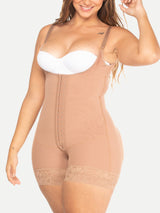
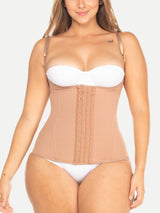
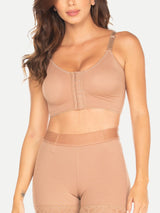

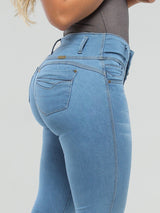




Yes, fajas work, but the answer is nuanced. Fajas produce real, immediate effects: they smooth the waistline, lift and round the rear, support posture, and during post-surgical recovery they help guide tissue as it heals. They do not permanently change body shape on their own. Most effects last only while the garment is worn, with post-surgical results being the major exception.
In This Article · 7 min read
"Do fajas actually work?" is the question that should be asked, and most articles on the topic either oversell ("instant waist reduction! permanent results!") or dismiss the garment entirely. The honest answer sits between those extremes. Fajas do something real, both immediately and (in specific contexts) lastingly. They are also not magic. This guide walks through what the research and decades of clinical use actually show, and where the marketing diverges from reality.
We have been fitting Colombian fajas in our New Jersey store since 2012, and the difference between a customer who understands what a faja can and cannot do versus one who expects unrealistic results is the difference between long-term satisfaction and frustration. Honest expectations are the start of a faja actually working for you.
What Fajas Actually Do
The simple version: a faja makes you look slimmer the moment you put it on. Your waist looks defined, your tummy looks flat, your rear looks lifted and rounded, and your dress fits the way you wanted it to in the dressing room. That is what a faja does. It is not pretending.
Here is what is happening under your clothing:
- Your waist looks defined. The Powernet compresses the soft tissue around your midsection and redistributes it. The visible result is a smaller-looking waist and a flatter belly.
- Your rear looks lifted and rounded. Butt-lifting fajas use cut-and-stitch panels that round and lift the glutes upward instead of flattening them. No padding involved, just smart construction.
- Your dress fits better. That fitted dress you want to wear to a wedding, a date, or a night out? A faja is what makes it fit the way the model wore it. It smooths every line, eliminates the muffin top, and lets the dress fall the way it was designed to.
- You stand taller. The firm structure encourages upright posture, especially through the lower back. Many customers say they feel more confident in their body just from how they hold themselves while wearing a faja.
- You feel held together. After a baby, after a long day on your feet, after years of wishing your jeans fit a little better, a good faja gives you a feeling of support that does not exist with regular clothes alone.
None of this is exaggerated. Every effect listed here is what you will see in the mirror the first time you put on a properly-fitted Colombian faja. The lift, the smoothing, the defined waist, all real, all immediate.
The honest part to add is this: most of these effects last only while you are wearing it. Take the faja off and your natural shape returns. For event wear, daily wear, and dressing for a specific outfit, that is exactly enough. For permanent body change, that is where things get more nuanced, which we cover below.
The Science Behind Compression Garments
Compression garments have decades of peer-reviewed research backing their use in two contexts: post-surgical recovery and lymphatic support. The findings are well-established and have shaped how surgeons and recovery specialists treat post-operative patients today.
In post-surgical contexts, compression is considered standard practice after liposuction, abdominoplasty, BBL, and similar body-contouring procedures. Research shows compression reduces post-operative swelling, supports lymphatic drainage, helps the skin adapt to its new contours, and improves patient comfort during the acute recovery period. Surgeons do not just recommend a faja after these procedures, they require one as part of the protocol.
This medical heritage is also why Colombian fajas exist as a category at all. The shapewear industry in Medellín developed in the 1970s and 1980s specifically to produce compression garments for the post-surgical market. Over decades, Colombian manufacturers refined the construction techniques, fabric blends (Powernet, Triconet, Lycra), and panel placement that now define authentic Colombian fajas. The daily-wear styles you see today are an extension of that medical-grade craft, not a separate industry. When you wear a Colombiana Boutique faja for daily shaping, you are wearing a garment built to the same standards as the ones used in surgical recovery.
Where Fajas Are Essential: Post-Surgical Recovery
If there is one context where fajas unambiguously, undeniably work, it is post-surgical recovery. Surgeons performing liposuction, BBL, abdominoplasty, and similar procedures consider compression garments not optional but essential to the outcome.
Here is why. After body-contouring surgery, the tissue underneath the skin is malleable for several weeks. Surgeons often describe the post-op body as being "like gelatin" during the early healing window: the fat cells, tissue, and skin are stable but still settling. The faja acts as the mold during this period. It holds the body in its newly-contoured shape while the tissue heals around that form. Without firm, even compression, the body settles unevenly. With the right faja worn for 22 to 23 hours per day, the body heals into the intended silhouette.
This is also why the staging matters. Stage 1 fajas (worn during the first 1 to 14 days) provide light to moderate compression while incisions heal and the most acute swelling resolves. Stage 2 fajas (weeks 3 to 12) use firmer compression as the body actively retracts and conforms. Stage 3 fajas (month 3+) deliver maximum compression to finalize the contour. For complete recovery protocols, see our Stage 1 vs Stage 2 vs Stage 3 faja guide and our BBL recovery guide.

The most-requested post-surgical style we carry is the NS086 Full Body Sculpting Faja, which provides Sculpt-level compression from bust to mid-thigh with a built-in bra. It is what surgeons and patients return to throughout the Stage 2 window. Always follow your surgeon's specific protocol before ordering.
Waist Training and Latex Fajas: What's Real
Waist training and latex waist trainers attract more skepticism than any other category, and some of that skepticism is warranted. Here is the honest breakdown of what each does.
Standard waist training (Powernet, non-latex)
Worn 6 to 8 hours per day over months, a waist trainer like the NS006 Powernet Waist Trainer can produce modest, gradual waistline definition. The mechanism is part fabric compression, part posture training (you sit and stand more upright with the firm structure in place), and part behavioral (you tend to eat smaller portions because of the snug fit). The change is real but slow, typically measurable in centimeters over many weeks of consistent wear.
Latex waist trainers and gym use
Latex outer layers (like on the 1026 Sports Latex Waist Trainer) are designed specifically for workouts. The latex traps heat against the midsection, which encourages localized sweating during cardio and weight training. There are three real benefits and one important honest caveat.
What is real:
- Increased core engagement. The firm compression around the midsection reinforces awareness of your core during squats, lunges, deadlifts, and any compound lift. Many trainers recommend a waist trainer for this reason alone.
- More intense workout sensation. The elevated core temperature can make a workout feel harder, which may push some women to work harder.
- Visible waist definition during the workout. The shape is real while it is on.
The honest caveat: the water weight you lose from sweating in a latex waist trainer is just that, water. It comes back when you rehydrate, which you should always do after exercise. Latex waist trainers do not directly burn fat or cause weight loss beyond what your workout itself does. Anyone selling them as a weight loss tool is overselling. They are a workout accessory that supports posture, core engagement, and (yes) sweat, not a fat-burning device.

For a deeper dive on the waist training conversation, see our do waist trainers actually work guide.
What Fajas Do Not Do
To establish what fajas DO with credibility, we should be equally clear about what they do not. Skepticism about fajas comes from marketers who promised these things and could not deliver.
- They do not permanently reshape your body on their own. The exception is post-surgical recovery, where the faja holds healing tissue in shape and the body retains that shape after the garment is no longer needed.
- They do not cause weight loss. A faja can make you look slimmer while worn. It does not change your weight on the scale.
- They do not replace exercise or nutrition. Body composition changes come from training, nutrition, and time. A faja shapes what is there; it does not change it.
- They do not "treat" medical conditions. Posture support is real. Pain relief, organ repositioning, and fat reduction are not claims compression garments can honestly make.
- They do not work invisibly fast. Waist training, when it works at all, takes months of consistent wear. Anyone promising "two weeks to a smaller waist" is selling something other than fajas.
How Long Do the Effects Last?
The duration of effects depends entirely on the context.
Daily wear
The smoothing, lifting, and posture effects last while the faja is worn. Take it off and your natural shape returns within minutes. This is true of all shapewear, Colombian or otherwise. The benefit is the look while you wear it, plus a marginal posture habit that may develop over months of consistent wear.
Post-surgical recovery
This is where the effects become lasting. Worn 22 to 23 hours per day during the acute recovery window and through Stage 2 and 3, the faja shapes the body during healing. The contour your body settles into is the contour you keep. This is why surgeons consider the faja non-negotiable: skipping or under-wearing it during recovery can compromise the surgical result.
Waist training
Modest, gradual waistline definition over months of 6 to 8 hour daily wear. The change is not dramatic and not instant, but real for women who commit consistently. Take a break from training and the natural shape returns over weeks.
Results at a Glance
| Use Case | Does It Work? | How Long Do Results Last? |
|---|---|---|
| Daily shaping under clothing | Yes, immediately | While worn |
| Event wear (weddings, dresses) | Yes, immediately | While worn |
| Posture support | Yes | While worn, with habit-building over months |
| Post-surgical recovery | Yes, essential | Permanent (shapes healing tissue) |
| Waist training (months of wear) | Yes, modestly | Slow change over months, fades if you stop |
| Weight loss | No | Does not happen from wearing a faja |
| Permanent body reshaping (without surgery) | No | Does not happen from wearing a faja |
Frequently Asked Questions
Are the results from a faja permanent?
For daily wear, no. The smoothing and lifting effects last only while worn, and your natural shape returns when the faja comes off. For post-surgical recovery, yes. The faja holds healing tissue in shape during the recovery window, and the body retains that contour after healing is complete.
Do fajas help with posture?
Yes. The firm structure encourages upright posture, especially through the lower back. Over weeks of consistent wear, many customers develop better postural habits that persist even when they are not wearing the faja. This is one of the most consistently reported long-term benefits.
Is it true that surgeons require fajas after liposuction and BBL?
Yes. Compression garments are standard practice after liposuction, BBL, abdominoplasty, and similar body-contouring procedures. Surgeons consider the post-surgical faja essential to the outcome because it holds the body in its new shape while the tissue heals. Skipping or under-wearing it during recovery can compromise the surgical result.
Will I lose weight wearing a faja?
No. A faja does not cause weight loss. It can make you look slimmer while worn by redistributing soft tissue and smoothing the waistline, but it does not change what shows on a scale. Anyone marketing a faja as a weight loss tool is overselling. The honest benefit is shape while worn, plus the modest, slow waistline definition that can come from months of consistent waist training.
How long until I see results from a daily-wear faja?
Immediately. The smoothing, lifting, and posture effects are visible the first time you put a properly-fitted faja on. Under fitted clothing, the difference is obvious. The long-term benefit is consistent shape while worn over years of use, plus posture habits that develop over time.
Ready to find a faja that actually works for what you need? Browse the full Colombian fajas collection sorted by compression level and use case, or the