



A postpartum faja is a Colombian compression garment that gently supports your abdomen and back as your body recovers after birth. Many mothers begin light compression within the first day or two after a vaginal birth, and after clearance from their provider following a C-section. The right style depends on your delivery, your comfort, and whether you are breastfeeding.
Bringing a baby into the world puts your body through an enormous amount. Your organs shifted, your muscles stretched, and now everything is finding its way back. A well made faja will not rush that process, but it can help you feel supported, secure, and a little more like yourself while it happens. Here is everything you need to know before you choose one.
In This Article · 6 min read
- When can you start wearing a postpartum faja?
- How long should you wear a postpartum faja each day?
- What compression level do you need after birth?
- What should you look for in a good postpartum faja?
- Do postpartum fajas actually work?
- How to choose the right postpartum faja for you
- Frequently Asked Questions
When can you start wearing a postpartum faja?
It depends on how you delivered. Many mothers can begin gentle compression within the first 24 to 48 hours after an uncomplicated vaginal birth, while a C-section calls for your surgeon's clearance first. Always confirm with your own doctor or midwife before you start.
After a vaginal birth
Once you feel comfortable moving around, many providers are fine with light compression in those first couple of days. The goal early on is gentle support that helps you feel held, not firm shaping. Because your body will change size quickly in the first weeks as swelling goes down, an adjustable style with multiple rows of hooks lets you tighten the fit as you go instead of buying a new garment every few weeks.
After a C-section
A C-section is major abdominal surgery, so your incision needs time before anything sits against it. Wait for your provider's go-ahead, choose a style that keeps pressure off the incision line, and start with the gentlest setting. We cover this in more depth in our postpartum faja after C-section guide. If you had a cosmetic procedure alongside recovery, our post-surgical fajas are built specifically for healing tissue.
How long should you wear a postpartum faja each day?
Start with a few hours a day and build up gradually as your body adjusts. Most mothers get the greatest benefit within the first three months, when tissues and muscles are still settling back toward their pre-pregnancy position.
A gentle way to ease in, always subject to your provider's guidance:
| Stage | A Common Gentle Approach |
|---|---|
| First days to week 2 | A few hours at a time, light compression, off overnight |
| Weeks 2 to 6 | Build toward longer daytime wear with breaks for your skin |
| Week 6 onward | Longer daily wear once your provider confirms you are healing well |
A few rules of thumb: take it off to sleep, give your skin breaks, and never push through pain. It should feel snug and supportive, never so tight that you cannot take a full breath or sit comfortably.
What compression level do you need after birth?
Early recovery calls for lighter compression, and you can move up as you heal. At Colombiana Boutique we keep it simple with two levels that matter most for postpartum: Smooth and Sculpt.
- Smooth (Level 1) is gentle, everyday support. It is the comfortable starting point for the early weeks and for mothers who simply want to feel a little more secure and put together.
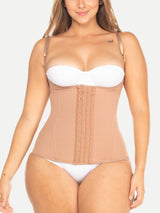
- Sculpt (Level 2) is firmer, structured compression with hooks you can adjust as your body changes. It is what most mothers move into once they feel ready for more support.
If you are not sure where to begin, start with Smooth and progress to Sculpt as you feel comfortable. There is no prize for jumping to the firmest garment on day one.
What should you look for in a good postpartum faja?
Not every shaping garment is built for a recovering body. A genuine postpartum faja is designed around healing, adjustability, and comfort rather than aggressive cinching.
- Adjustable hook closures. Multiple rows of hooks let you tighten the fit as swelling goes down, so one garment carries you through weeks of change.
- Soft, breathable powernet. Your skin is more sensitive right now, so you want firm support in a fabric that stays soft against you and lets your skin breathe. Colombian powernet is prized for exactly this, structured but gentle.
- Nursing-friendly design. If you are breastfeeding, a wire free built-in bra or an easy-access top saves you constant adjusting.
- Back and posture support. A higher back panel gives your lower back something to brace against while you are lifting and feeding your baby all day, which supports posture.
- The right coverage. High-waist and full-body styles give the most complete abdominal support; shorter styles trade some coverage for everyday ease.
Do postpartum fajas actually work?
Yes, when you choose a proper garment and wear it sensibly. A postpartum faja will not do the healing for you, but it provides real physical support, helps manage swelling, and makes moving through those first weeks more comfortable.
Postpartum belly binding is not new. Cultures across Latin America, Asia, and Europe have wrapped and supported new mothers for centuries. A modern Colombian faja is simply a more refined version of that same idea: structured compression that helps you feel supported while your body does its work. What it is not is a shortcut or a substitute for rest, nutrition, and your provider's care. Set your expectations there and a faja becomes a genuinely useful part of recovery. For the fuller picture, see our do fajas actually work guide.
How to choose the right postpartum faja for you
Here is how the three most popular postpartum styles at Colombiana Boutique match up to real recovery situations. All are made in Colombia from soft, breathable powernet.
If you had a vaginal birth and want adjustable support
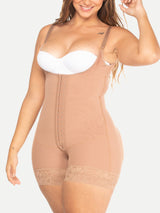
The Sculpting Faja with Hooks and Thick Straps (NS049) is our go-to. It is a full-body Sculpt (Level 2) faja with multiple rows of hooks, so you can adjust the fit as your body changes week to week, and the wider straps keep it comfortable for all-day wear.

If you are breastfeeding
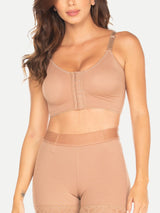
The Sculpting Faja with Hooks and Built-In Bra (NS086) has the same adjustable Sculpt (Level 2) support, plus a built-in wire free bra. No underwire means real comfort for nursing mothers, and you get shaping and breast support in one garment.
If you want gentle, lighter compression
The Luxe Strapless Shaping Faja (CB198) is a Smooth (Level 1) option for mothers who do not want firm compression, whether that is because you are early in recovery or you simply prefer a lighter, more everyday feel.
You can see all of these side by side in our postpartum shapewear collection, with compression levels marked on every product so you can match the right one to where you are in recovery.
Frequently Asked Questions
When can I start wearing a postpartum faja?
After an uncomplicated vaginal birth, many mothers begin gentle compression within the first day or two, once moving feels comfortable. After a C-section, wait for your surgeon's clearance. Always confirm with your own doctor or midwife first.
How many hours a day should I wear a postpartum faja?
Start with a few hours a day and build up gradually. Take it off overnight and give your skin regular breaks. It should always feel supportive, never painful.
Can I wear a postpartum faja after a C-section?
Yes, once your provider clears you. Choose a style that keeps pressure off your incision line and begin with the gentlest setting. Watch the incision for any redness or irritation and stop if something does not feel right.
What compression level is best after giving birth?
Lighter compression is best in the early weeks, so many mothers start with a Smooth (Level 1) faja and move to a firmer Sculpt (Level 2) style as they heal. There is no need to start with the firmest garment.
Can I wear a postpartum faja while breastfeeding?
Yes. A style with a wire free built-in bra, like the NS086, is designed for exactly this, giving you support and easy nursing access without an underwire pressing on sensitive tissue.
Written by Lisset Carmona, faja fit specialist at Colombiana Boutique, who has fitted Colombian fajas and postpartum shapewear for new mothers since 2012.